

Comprehensive Laboratory Guide: Advanced Antimicrobial Research with LL-37
The landscape of immunological and antimicrobial research requires compounds of uncompromising integrity and verified structural stability. For academic institutions, independent laboratories, and commercial research facilities, securing high-fidelity materials is the foundation of reproducible data. Orbitrex provides researchers with premium access to LL-37 5mg Australia, a potent, naturally occurring antimicrobial peptide that plays a critical role in the innate immune system. This extensive technical guide outlines the biological origins, structural properties, primary mechanisms of action, in-vitro applications, and strict laboratory handling protocols required when utilizing this advanced compound in contemporary scientific studies.
Biological Origin: The Human Cathelicidin Pathway
To fully contextualize the application of LL-37 5mg Australia in a laboratory setting, researchers must first understand its biological genesis. LL-37 is the only member of the cathelicidin family of antimicrobial peptides expressed in humans. It is entirely derived from the cleavage of the 18-kDa human cathelicidin antimicrobial protein, known as hCAP18. In vivo, hCAP18 is synthesized predominantly by neutrophils, mucosal epithelial cells, and keratinocytes.
During an inflammatory response or upon cellular activation, the hCAP18 precursor molecule undergoes proteolytic cleavage by the enzyme proteinase 3. This specific enzymatic action liberates the mature, active 37-amino acid peptide—LL-37. When laboratories procure LL-37 5mg Australia for in-vitro analysis, they are acquiring a synthetically replicated version of this exact cleavage product, designed to mimic the biological activity of the endogenous peptide with absolute precision.
Structural Conformation and Biophysical Properties
The efficacy of this compound relies heavily on its unique molecular architecture. The sequence of LL-37 5mg Australia is composed of 37 amino acids, beginning with two leucine residues (hence the “LL” designation). The complete amino acid sequence is LLGDFFRKSKEKIGKEFKRIVQRIKDFLRNLVPRTES.
In aqueous solutions, the peptide generally assumes a disordered structure. However, upon encountering lipid membranes—such as those surrounding bacterial cells—the compound rapidly transitions into a highly amphipathic alpha-helical conformation. This amphipathic nature means the molecule possesses distinct hydrophobic and hydrophilic domains. This structural duality is the primary reason researchers utilize LL-37 5mg Australia in membrane disruption assays. The hydrophobic face allows the peptide to insert itself deep into the lipid bilayer of target pathogens, while the hydrophilic face interacts with the aqueous environment, ultimately leading to membrane destabilization.
Primary Mechanism of Action: Antimicrobial Activity
The most prominent application for LL-37 5mg Australia in modern laboratories is the investigation of its broad-spectrum antimicrobial properties. Unlike traditional antibiotics, which often target specific enzymatic pathways or metabolic processes within a bacterium, cathelicidins employ a direct, biophysical mechanism of action.
When introduced to an in-vitro bacterial culture, the highly cationic (positively charged) nature of the peptide is drawn to the negatively charged components of bacterial cell walls, such as the lipopolysaccharides (LPS) in Gram-negative bacteria or the lipoteichoic acids in Gram-positive bacteria. Researchers utilizing LL-37 5mg Australia can observe via electron microscopy or fluorescent assays how the peptide accumulates on the membrane surface. Once a critical concentration threshold is reached, the peptides aggregate to form transmembrane pores.
This process, often described by the “carpet model” or “toroidal pore model,” leads to an immediate loss of membrane potential, catastrophic leakage of intracellular contents, and rapid cellular lysis. This direct physical disruption makes it exceptionally difficult for pathogens to develop resistance, making LL-37 5mg Australia a critical compound in the ongoing research against multi-drug resistant (MDR) bacterial strains.
Efficacy Against Biofilms in In-Vitro Models
Beyond eradicating planktonic (free-floating) bacteria, scientific focus has heavily shifted toward the eradication of biofilms. Biofilms are complex, matrix-enclosed bacterial communities that are notoriously resilient to standard antimicrobial agents. Laboratory studies involving LL-37 5mg Australia have demonstrated the peptide’s unique capacity to not only inhibit the initial formation of these biofilms but also to degrade established extracellular polymeric substances (EPS).
By running assays with LL-37 5mg Australia, researchers can quantify the compound’s ability to down-regulate specific bacterial genes responsible for biofilm matrix production. At sub-inhibitory concentrations, the peptide can interfere with bacterial quorum sensing—the chemical communication networks pathogens use to coordinate biofilm assembly. This makes the compound an invaluable tool for facilities researching novel treatments for persistent infections, such as those associated with medical implants or chronic cystic fibrosis models.
Immunomodulatory and Chemotactic Functions
While its direct bactericidal activity is profound, the utility of LL-37 5mg Australia extends deeply into immunomodulation. In human biology, the peptide serves as a powerful signaling molecule, bridging the gap between innate and adaptive immunity. In controlled laboratory environments, the introduction of this compound to human cell lines triggers a cascade of complex immunological responses.
Researchers utilize LL-37 5mg Australia to study its role as a chemoattractant. The peptide binds specifically to the formyl peptide receptor-like 1 (FPRL1), facilitating the rapid migration of neutrophils, monocytes, and T-cells to sites of infection or tissue damage. Furthermore, laboratory protocols involving LL-37 5mg Australia often focus on its ability to neutralize bacterial endotoxins. By directly binding to lipopolysaccharides (LPS) released during bacterial lysis, the peptide effectively dampens the release of pro-inflammatory cytokines, thereby preventing potentially fatal hyper-inflammatory responses such as sepsis in biological models.
Role in Angiogenesis and Wound Healing Assays
Another highly active area of investigation involves cellular regeneration and tissue repair. The application of LL-37 5mg Australia in sophisticated wound healing assays allows laboratories to observe the peptide’s direct influence on vascularization. The compound has been shown to induce angiogenesis—the formation of new blood vessels from pre-existing vessels—which is a critical component of the proliferative phase of wound healing.
When applied to endothelial cell cultures, LL-37 5mg Australia stimulates cellular proliferation, migration, and the formation of tube-like structures. It achieves this by transactivating the epidermal growth factor receptor (EGFR) and increasing the expression of vascular endothelial growth factor (VEGF). Facilities procuring this material can establish robust in-vitro models to analyze how cathelicidins accelerate the closure of epithelial barriers, offering profound insights into potential future therapies for chronic, non-healing ulcers.
Emerging Research: Oncology and Cellular Apoptosis
The scientific community is increasingly exploring the complex relationship between cathelicidins and oncology. The dual nature of this peptide in tumor microenvironments makes it a fascinating subject for advanced cellular research. Depending on the specific cancer cell line being studied, the application of LL-37 5mg Australia can yield vastly different results.
In certain in-vitro models, particularly involving gastric or colon cancer cell lines, researchers utilizing LL-37 5mg Australia have documented the peptide inducing cellular apoptosis (programmed cell death) through the depolarization of mitochondrial membranes and the subsequent release of cytochrome c. Conversely, in other models, the peptide may promote cellular proliferation via receptor-mediated signaling pathways. This duality requires highly pure, standardized reagents to ensure experimental variables are tightly controlled, which is why sourcing verified materials is paramount for oncological research.
Implications in Autoimmune and Inflammatory Pathways
Because of its potent immunomodulatory effects, there is a significant research focus on how over-expression or dysregulation of cathelicidins contributes to autoimmune disorders. Psoriasis, rosacea, and systemic lupus erythematosus (SLE) are heavily researched in conjunction with this peptide.
By utilizing LL-37 5mg Australia, laboratories can simulate these inflammatory environments. For example, in SLE models, the peptide is known to bind to self-DNA and self-RNA, forming complexes that protect the nucleic acids from degradation. These complexes then activate plasmacytoid dendritic cells via Toll-like receptors (TLRs), triggering a massive release of interferon-alpha. Providing researchers with access to highly stable LL-37 5mg Australia allows for the meticulous mapping of these complex molecular cascades.
The Necessity of Absolute Purity in Peptidic Research
When conducting high-level cellular assays, the integrity of the data is directly proportional to the purity of the synthetic compounds utilized. The presence of truncated peptide chains, heavy metals, or residual synthesis reagents can trigger unintended cellular toxicity, generate false positives, or completely skew the results of an immunological assay. This is why Orbitrex ensures that every vial of LL-37 5mg Australia meets the most exacting purity standards in the industry.
We recognize that academic grants and commercial research funding depend on reproducible results. By supplying a product that strictly adheres to a minimum purity threshold of 99%+, we eliminate the chemical variables that plague lower-grade supplies. Your facility can proceed with confidence, knowing that the cellular responses observed in your assays are the direct result of the peptide, and not an artifact of chemical contamination.
Analytical Verification: HPLC and Mass Spectrometry
To guarantee this level of precision, our LL-37 5mg Australia undergoes uncompromising third-party analytical verification. We do not rely on standard manufacturer claims; we demand empirical, independent data for every batch.
The primary analytical tool utilized is High-Performance Liquid Chromatography (HPLC). This process separates the peptide from any potential impurities based on molecular interactions, providing a highly accurate purity percentage. Following HPLC, the batch is subjected to Mass Spectrometry (MS). This technique verifies the exact molecular weight of the compound, ensuring that the complex 37-amino acid sequence has been synthesized without structural errors, deletions, or incorrect amino acid substitutions. For further reading on the exact structural and chemical properties of this compound, researchers can review the highly detailed <a href=”https://pubchem.ncbi.nlm.nih.gov/compound/LL-37” target=”_blank” rel=”noopener”>PubChem database entry for LL-37</a>.
Standard Operating Procedures: Reconstitution Protocols
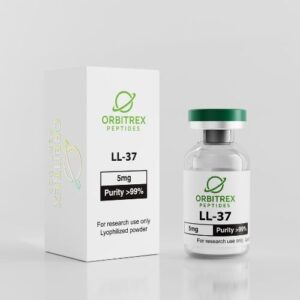
Upon receiving your shipment of LL-37 5mg Australia, strict laboratory protocols must be followed to ensure the compound remains biologically active. The peptide is supplied as a lyophilized (freeze-dried) white powder. In this state, it is highly stable, but it requires careful reconstitution before it can be utilized in an assay.
Researchers should exclusively use sterile, laboratory-grade diluents. Bacteriostatic water, sterile saline, or specific buffer solutions (such as PBS) are typically recommended, depending on the specific requirements of the intended cell culture. When reconstituting LL-37 5mg Australia, the diluent should be introduced to the vial slowly, allowing it to run down the interior glass wall rather than injecting it directly into the lyophilized puck. The vial should then be gently swirled—never shaken—to facilitate complete dissolution. Vigorous shaking can cause shearing forces that will permanently fracture the fragile amino acid chains, rendering the peptide useless for advanced research.
Advanced Storage and Stability Guidelines
Proper environmental control is vital for maintaining the efficacy of peptides. While in its lyophilized state, LL-37 5mg Australia is remarkably stable and can be stored at room temperature for brief periods, such as during expedited transit. However, upon arrival at your facility, unopened vials should be immediately transferred to a dedicated laboratory freezer and stored at -20°C or below. Under these optimal conditions, the lyophilized powder can remain viable for up to 36 months.
Once the LL-37 5mg Australia has been reconstituted into a liquid solution, its stability window decreases significantly. The liquid peptide should be stored consistently at 2°C to 8°C and should be utilized within 20 to 30 days. To prevent the degradation caused by repeated thermal cycling, researchers are strongly advised to aliquot the reconstituted solution into smaller, single-use sterile microcentrifuge tubes immediately after mixing. This ensures that the primary stock remains frozen and is only thawed once immediately prior to the specific assay.
Navigating Domestic Logistics and Supply Chains
One of the most significant hurdles facing modern laboratories is the procurement of sensitive biological materials. Sourcing from international vendors often means subjecting highly fragile peptide structures to unpredictable thermal conditions inside cargo holds, extended delays at customs checkpoints, and the very real risk of package seizure. Orbitrex was founded specifically to eliminate these destructive variables.
By serving as a dedicated domestic supplier, we guarantee that your LL-37 5mg Australia is managed entirely within our local, climate-controlled network. Orders are processed rapidly and dispatched via premium domestic couriers who specialize in the rapid transit of sensitive materials. This ensures that your compound remains structurally sound and biologically viable from the moment it leaves our distribution center to the moment it arrives on your laboratory bench.
Regulatory Compliance and In-Vitro Mandates
Orbitrex adheres strictly to all local and international guidelines regarding the distribution of scientific compounds. It is a fundamental condition of sale that all materials, including LL-37 5mg Australia, are utilized exclusively for in-vitro laboratory research and analytical experimentation.
This compound is strictly prohibited from being utilized for human consumption, animal testing, or any form of clinical or therapeutic application. By completing the procurement process for LL-37 5mg Australia, the purchasing facility legally acknowledges that the handling, storage, and application of this material will be conducted solely by qualified professionals operating within a regulated laboratory environment, utilizing standard safety protocols including the use of appropriate personal protective equipment (PPE).
Frequently Asked Questions (FAQ) Regarding Laboratory Procurement
Q: What is the exact purity level of the LL-37 provided? A: Every vial of LL-37 5mg Australia dispatched by Orbitrex is guaranteed to meet or exceed a 99% purity threshold. This is empirically verified through independent third-party HPLC and Mass Spectrometry testing to ensure your research data remains completely uncompromised.
Q: How is the peptide packaged to ensure stability during domestic transit? A: To protect the delicate structural integrity of the compound, your LL-37 5mg Australia is hermetically sealed in a premium, light-resistant glass vial. It is then securely packaged within specialized, climate-controlled materials to prevent any thermal degradation during its rapid transit across the country.
Q: Does Orbitrex provide specialized pricing for high-volume academic research? A: Absolutely. We understand that longitudinal studies and large-scale university research require a consistent and cost-effective supply chain. If your institution requires a bulk procurement of LL-37 5mg Australia, please contact our domestic support team prior to checkout to discuss specialized laboratory pricing and dedicated account management.
Q: Can I request the specific analytical certificates for my institution’s records? A: Transparency is a core pillar of our operational model. If your facility’s compliance department or peer-review board requires documentation, simply reach out to our team with your specific batch number. We will immediately provide the independent lab reports and analytical data corresponding to your exact order of LL-37 5mg Australia.